

The Circle of Life: Gratitude, Responsibility, and Reverence
The concept and experience of death are part of life for all of us, and they are rarely easy or simple. Yet when we are able to ground ourselves in meaning through reflection and ritual, death can be integrated into life rather than avoided or ignored.
This past week a community member came across a coyote who had died along the side of the road. Instead of leaving her behind, they thought of Ohmapi and brought her to us, offering an opportunity to honor her life and learn from this moment.
Scot began by teaching the students about the circle of life, the gratitude we hold for living beings, and for those whose physical forms are ready to return to the Earth, as well as our responsibility to care for all sentient beings throughout this circular journey.
“Before we take, we give thanks,” Scot shared.
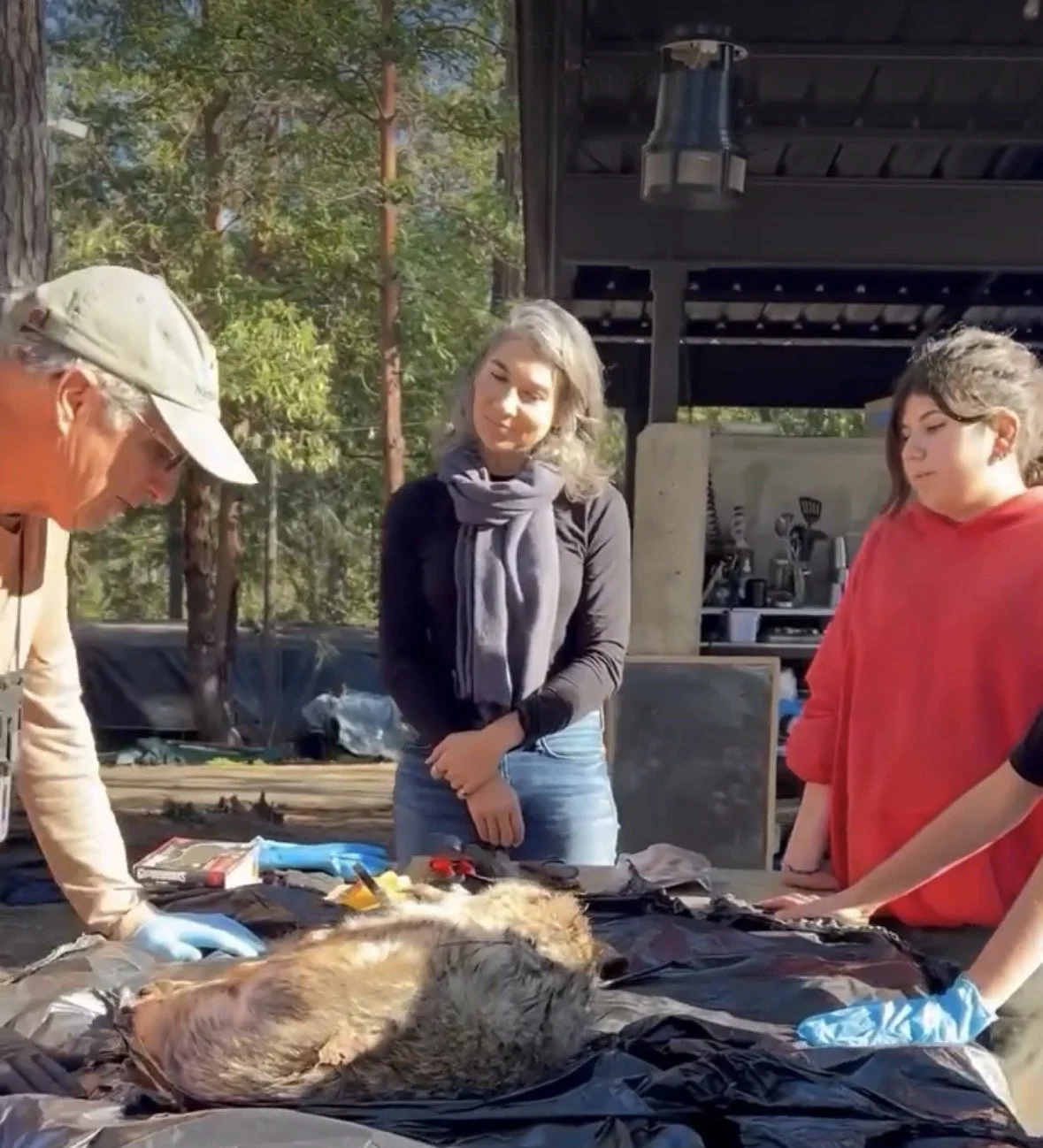
“I feel honored that we have this to work with.
I feel sad that she had to lose her life.
I want to let her and her spirit know that we’re going to make use of her beautiful fur, and help people learn about nature.”
The students reflected on the gifts that animals offer us, both in life and in death, and considered their responsibility to ensure that life is not wasted or disregarded.
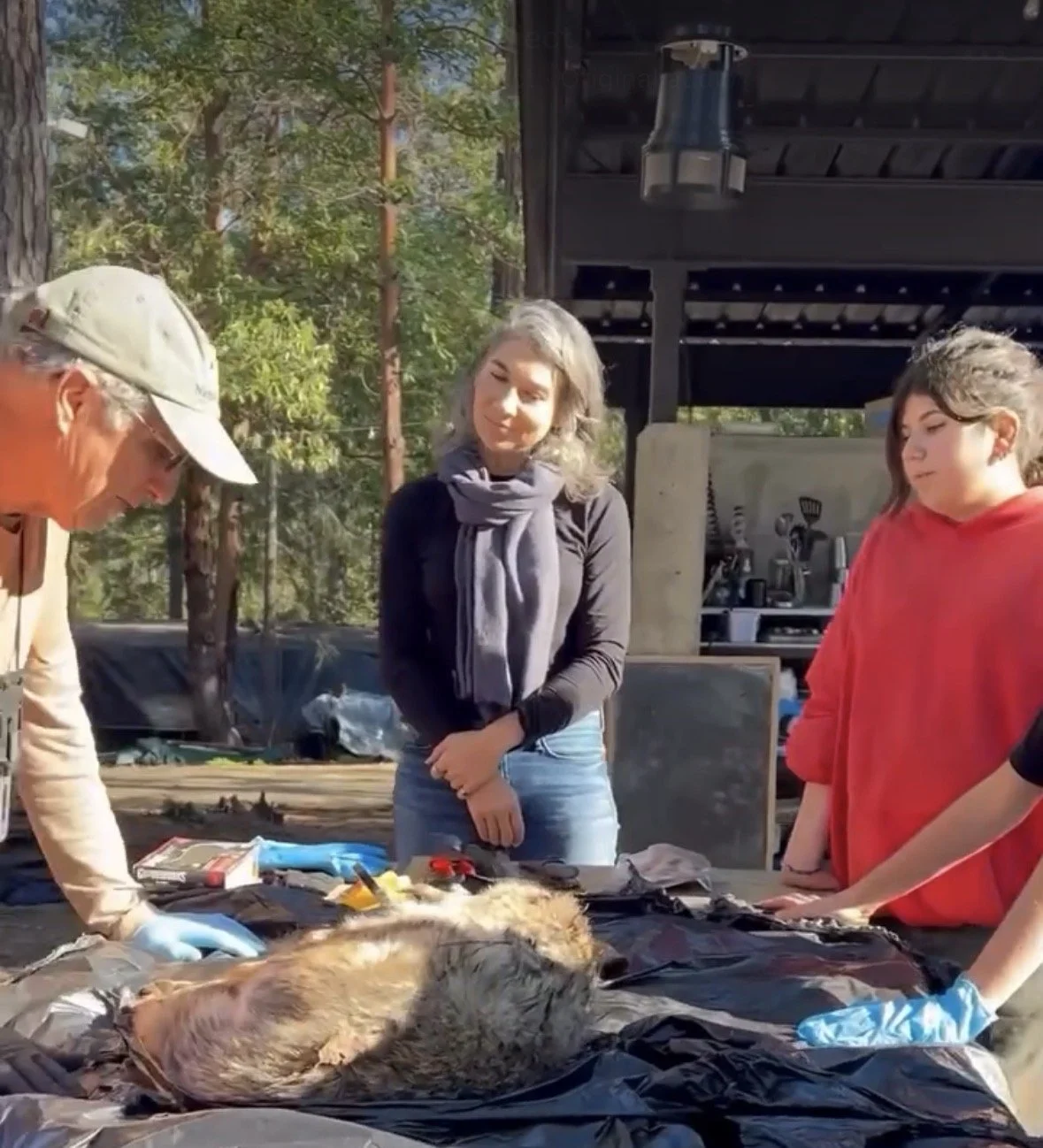
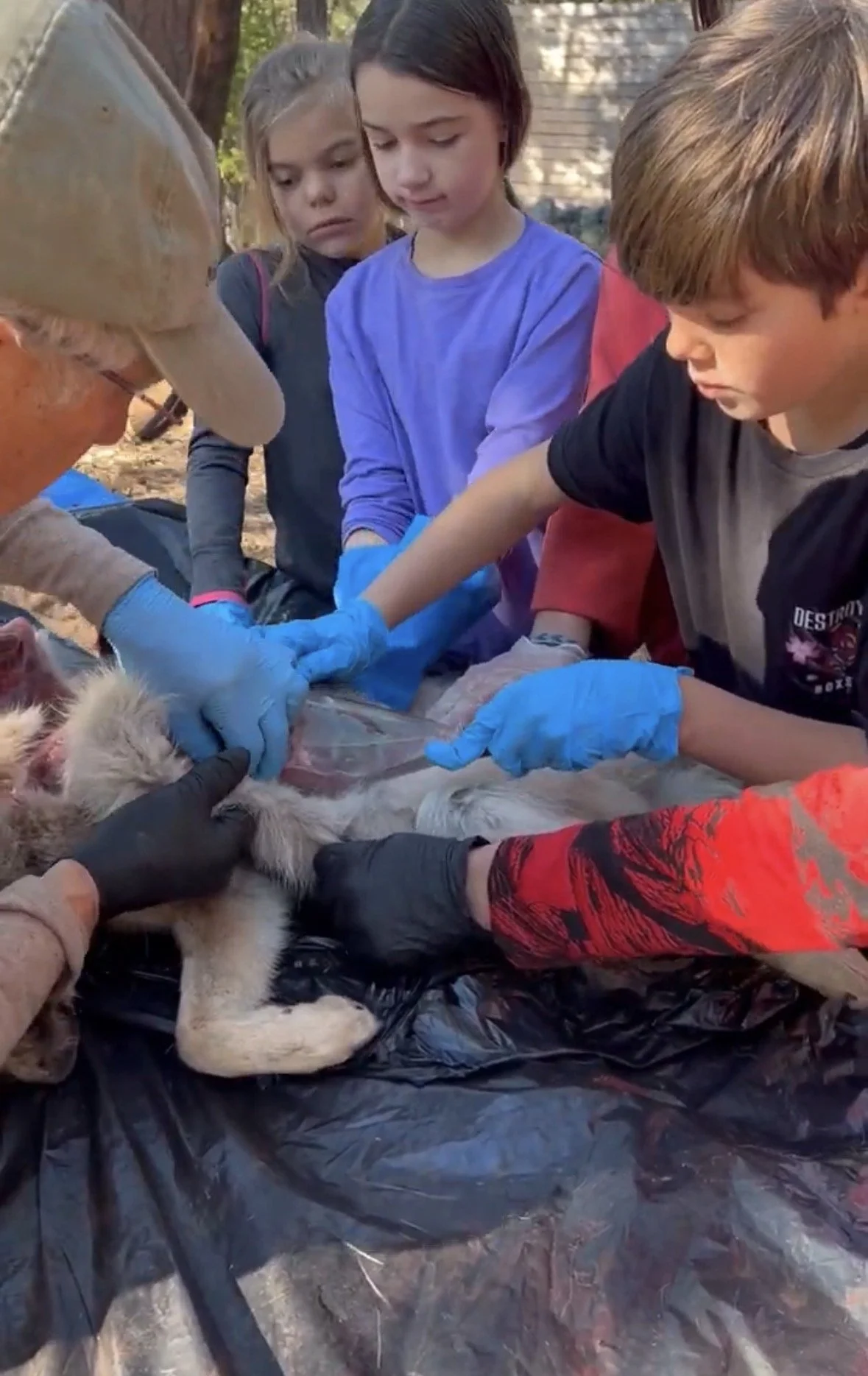
Next, the students participated in the careful, intentional process of skinning the coyote for her fur. This was done with guidance, attention, and care, emphasizing patience, responsibility, and gratitude for what the coyote provides. In using what the animal gives, we honor her life and allow his presence to continue in the world.
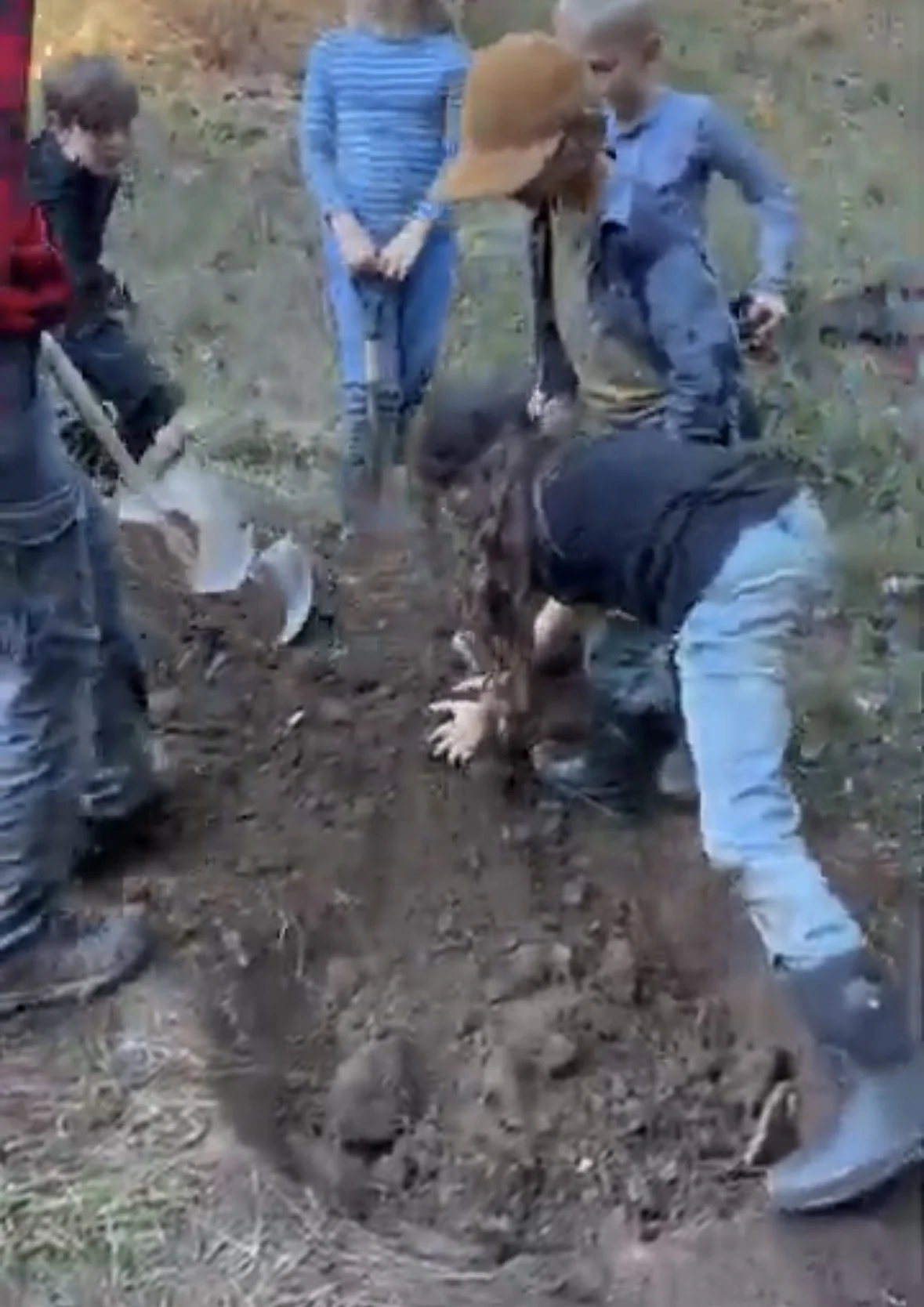
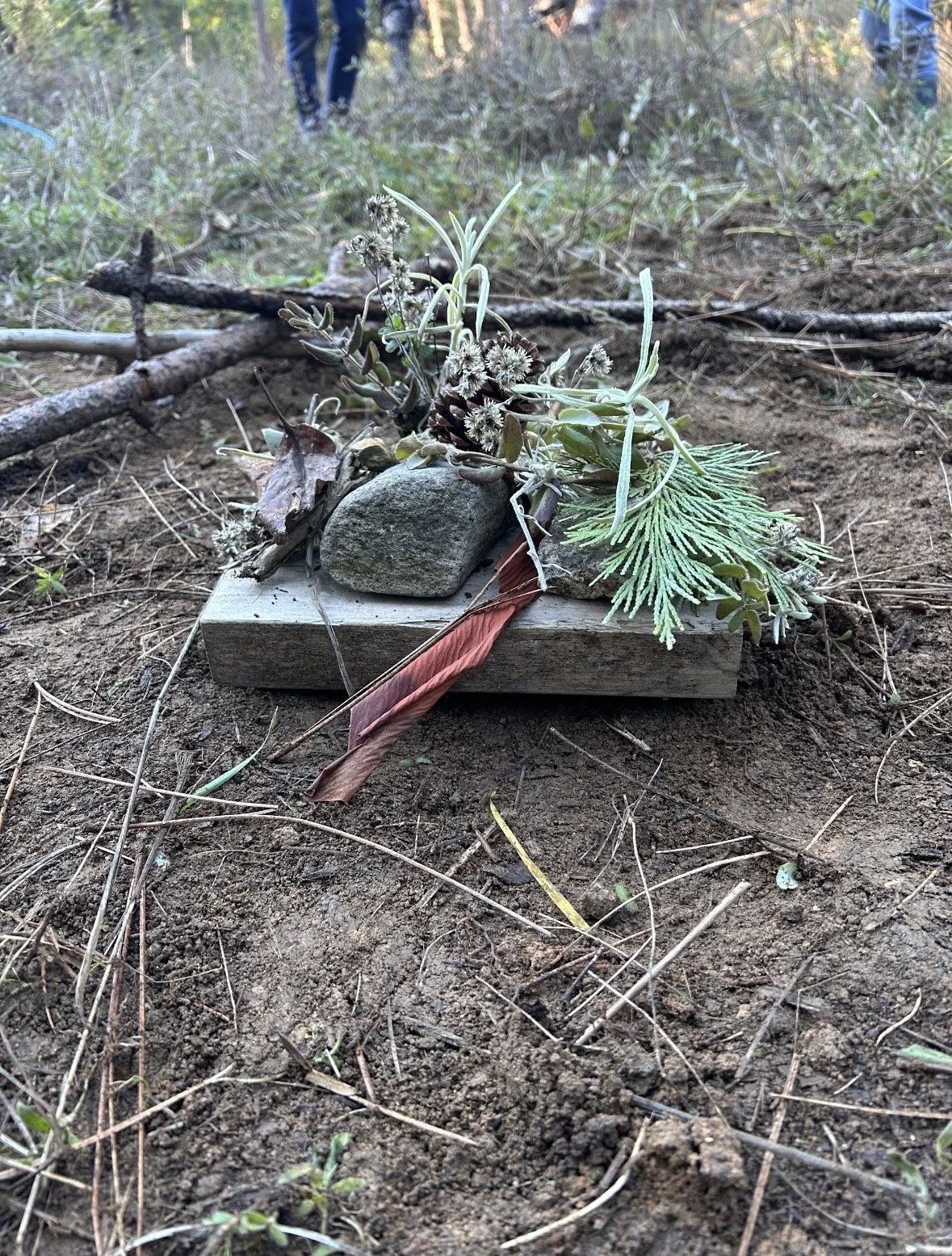
At the end of the day, the coyote was returned to the land. Each student took part in the burial, shoveling soil into the ground and offering their own words of gratitude and building a headstone of natural items to honor her grave.
The circle of life is all around us. It is present in plants that grow from the seeds of fallen trees, in mushrooms that break down decaying wood to nourish the soil, and in insects that return life back to the Earth. When we eat, we participate in this cycle as well: plants and animals give their lives to sustain us, and we are called to receive those gifts with care and gratitude. Even the compost heap in our garden reminds us that nothing truly disappears, everything is transformed and returned.
By engaging with these cycles intentionally, students learn that life is deeply interconnected. Every being, human, animal, or plant, plays a role, and every death carries lessons about responsibility, reciprocity, and care. Honoring the coyote was one way to make these lessons visible and tangible, but they echo throughout our daily lives.
This experience is part of a multi-week process. What the coyote will become takes time, patience, and reverence. Through this practice, students learn that honoring life, and death, is an ongoing journey, and that life given should never go to waste.
Closing Reflection
At Ohmapi, we take care to cultivate curiosity and gratitude in every experience. The circle of life asks us to slow down, notice, give thanks, and ensure that what we take is returned with respect and intention. Every action, big or small, participates in this ongoing, living cycle.