

This fall, our Earth block is all about soil. For children, soil can seem like the most ordinary thing in the world. It’s under their feet every day. But spend a season really getting to know it, and it becomes something else entirely: alive, changing, and in a relationship with everything that grows from it. Including us.
It started with potatoes
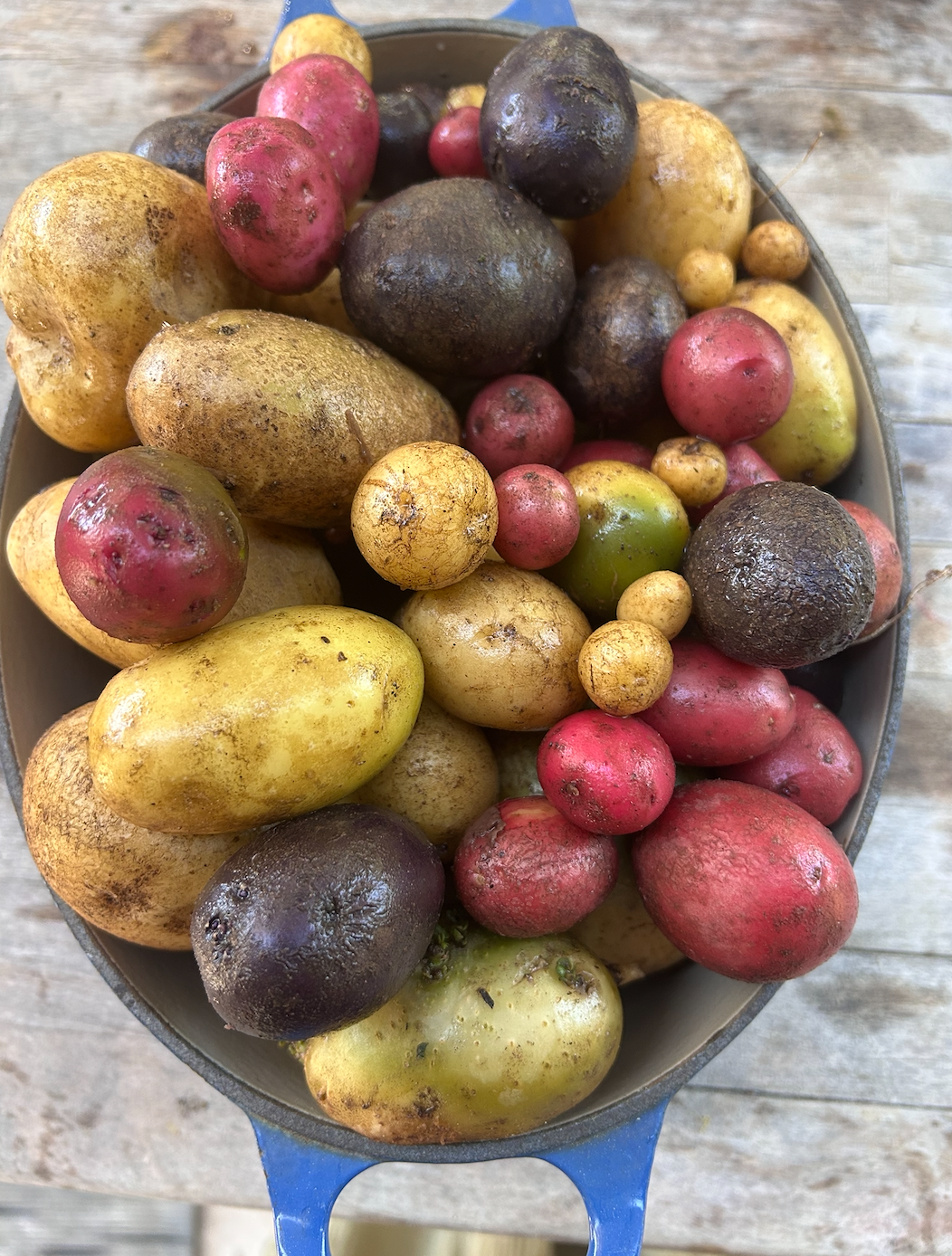
When classes began in September, the garden was ready for us. The children harvested and ate what had grown over the summer, and the favorite by a mile was potatoes. There’s a particular joy in pulling a potato from the ground with your own hands. Every one is a small surprise.
As the days shortened and the air cooled, our focus shifted from what the garden had given us to what it might need from us.
Asking the soil what it needs
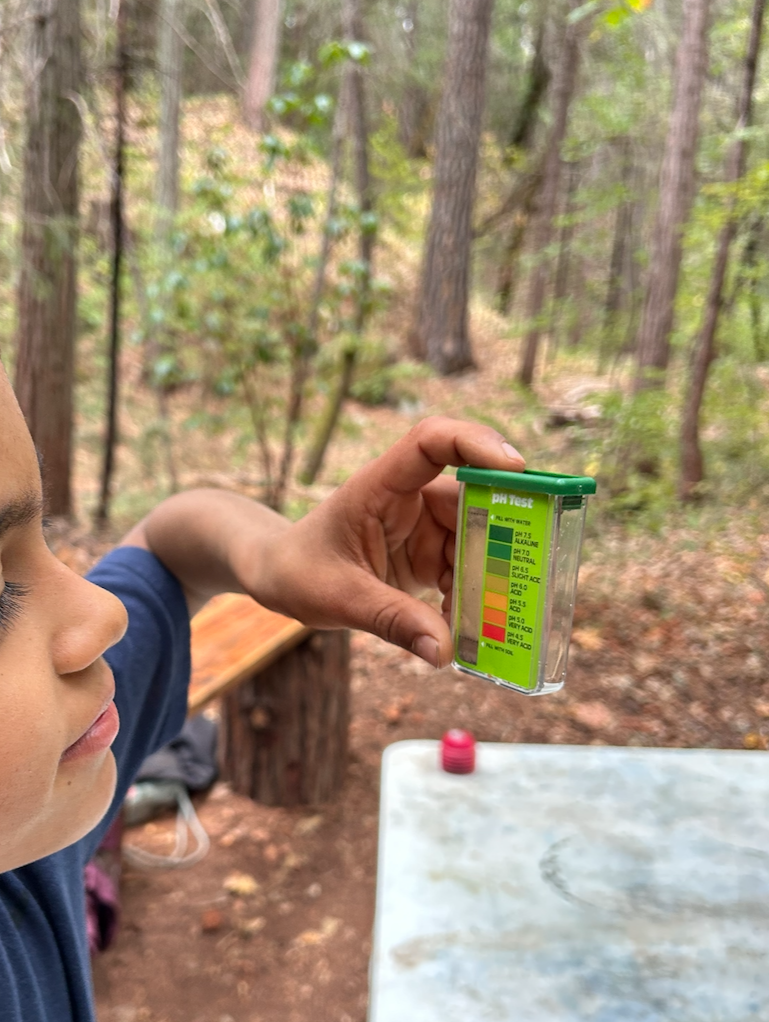
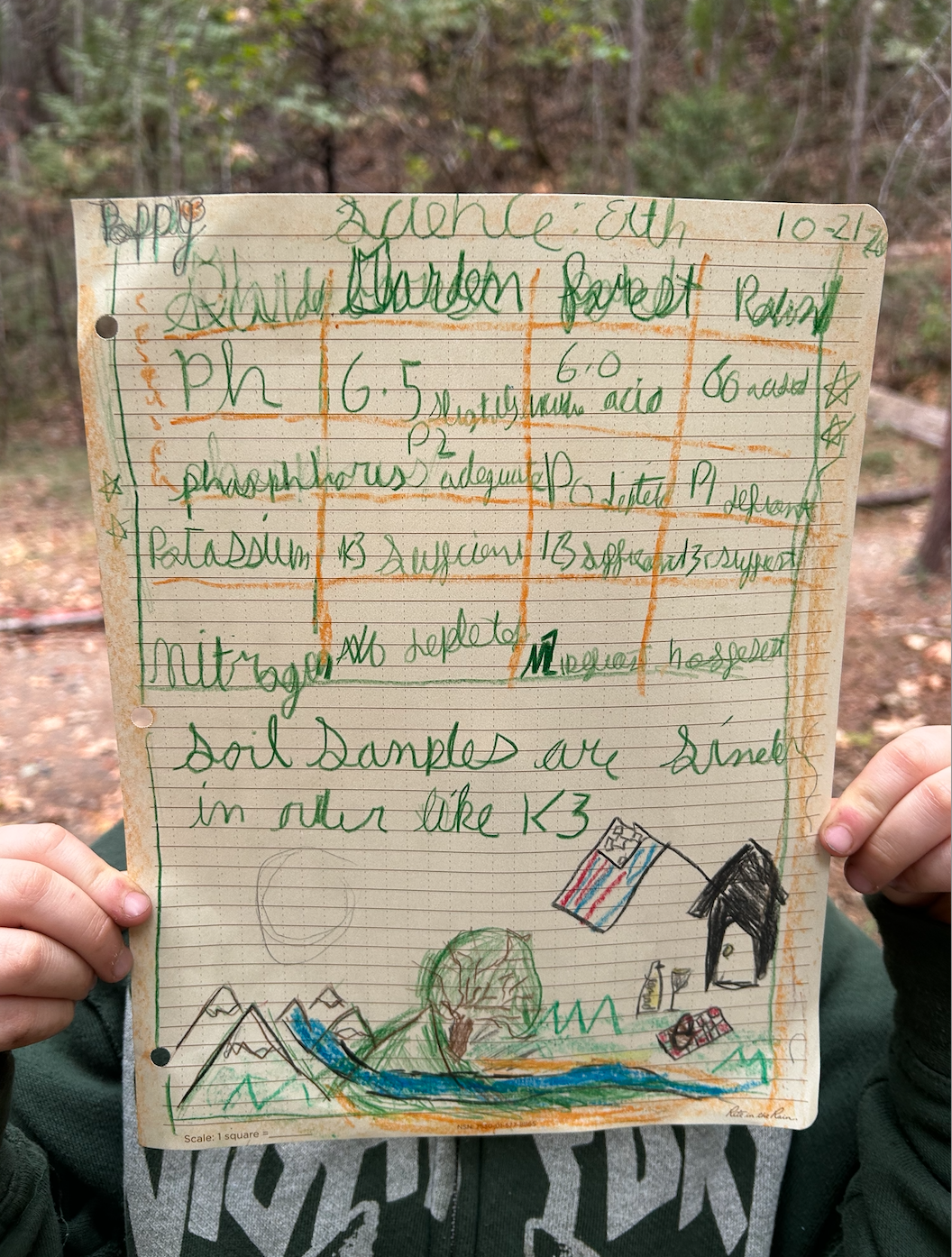
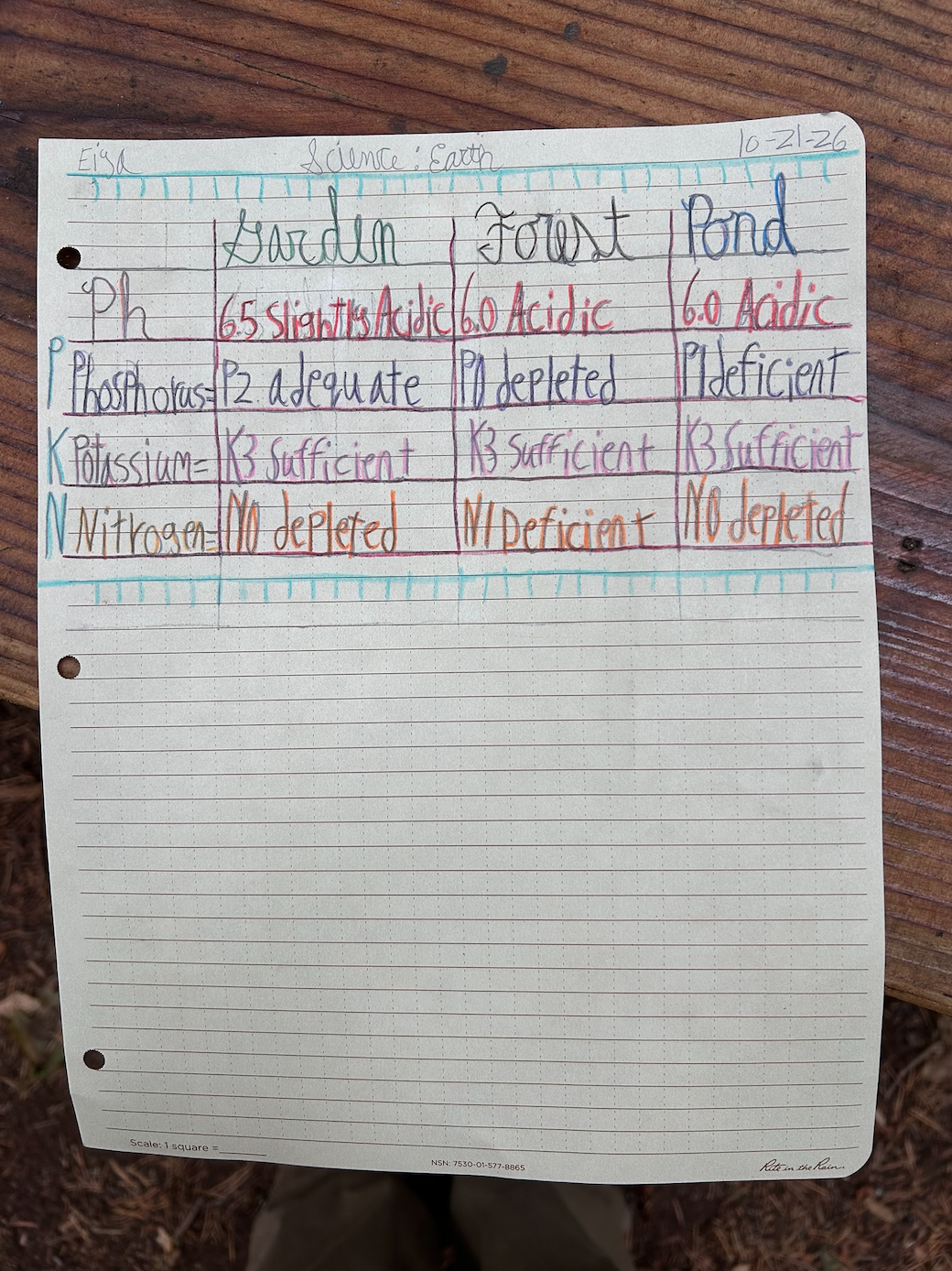
The children became soil scientists. They tested the garden soil for the three macronutrients plants depend on most: nitrogen, phosphorus and potassium. They also looked at the soil’s texture, meaning how much clay, silt and sand it contained.
To give the results context, they collected and compared samples from other parts of the property, including the forest and the meadow. The verdict was clear: our garden soil was low in all three macronutrients, and it needed more clay.
We also had two visitors who helped bring the science to life. A parent who is a soil scientist showed the children how to estimate clay content by “ribboning” a soil sample, squeezing moist soil between thumb and finger to see how long a ribbon it forms before breaking. And a local soil scientist brought in microscopes so the children could see the living microbes in our soils up close. For many of them, it was the first time they realized that a handful of dirt is full of life.
Giving back to the garden
Once we knew what the soil needed, we got to work.
The children learned about terra preta, the remarkably fertile “black earth” created by Indigenous communities in the Amazon over centuries. Inspired by it, we made our own biochar using charcoal from the previous year’s fires, then inoculated it with litter from our chicken coop to charge it with nutrients and microbial life.
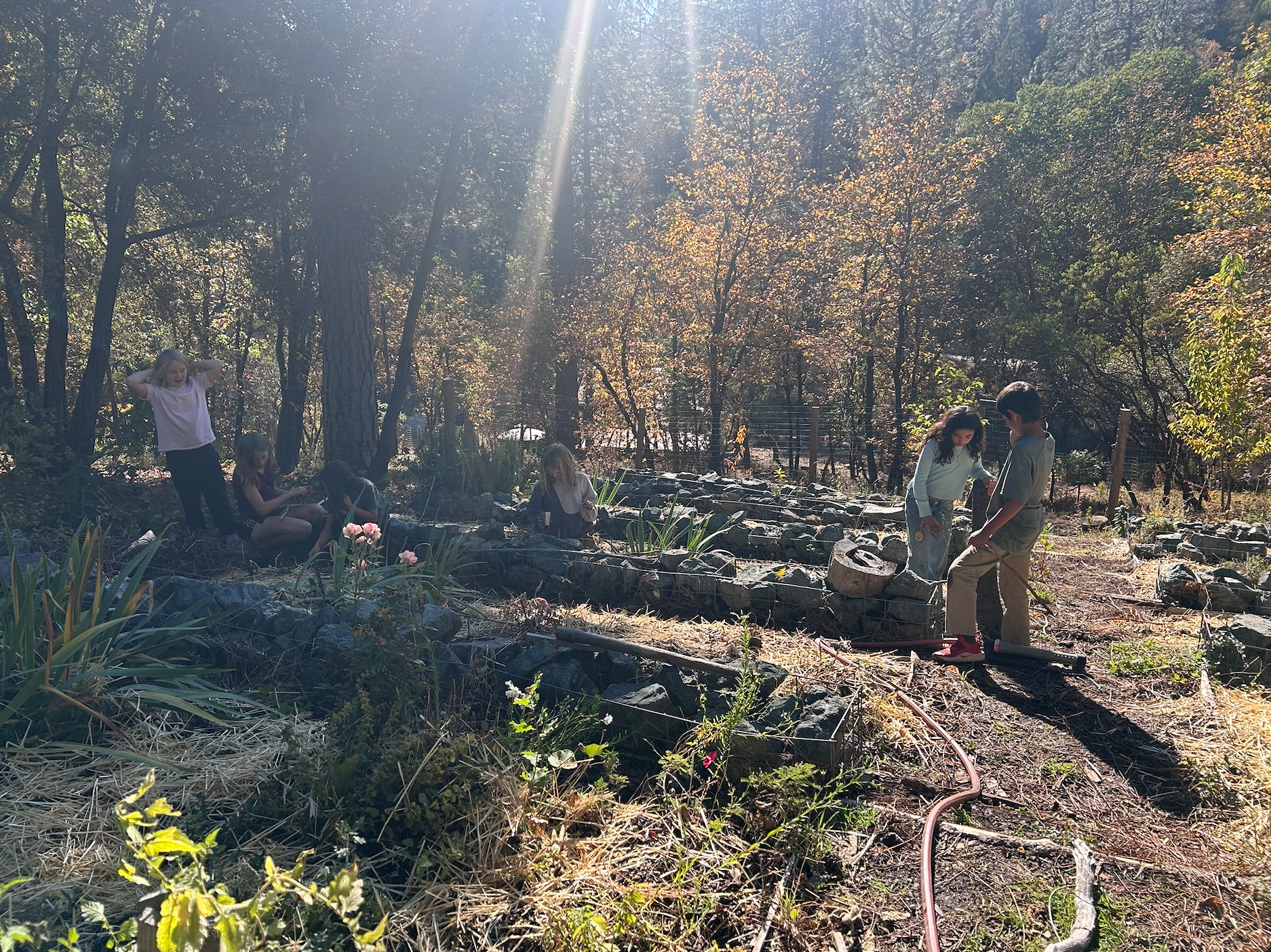
Next, we prepared the beds. The children removed spent plants and trimmed back most of the perennials. Then the garden got a nourishing blanket in layers:
Our homemade inoculated bio-char
Year-old, mycelium-rich mulch
More chicken coop litter
An organic fertilizer made mostly of fish emulsion and kelp
A top layer of straw
Then we did one of the hardest things for any gardener, young or old: we waited. But only for two weeks.
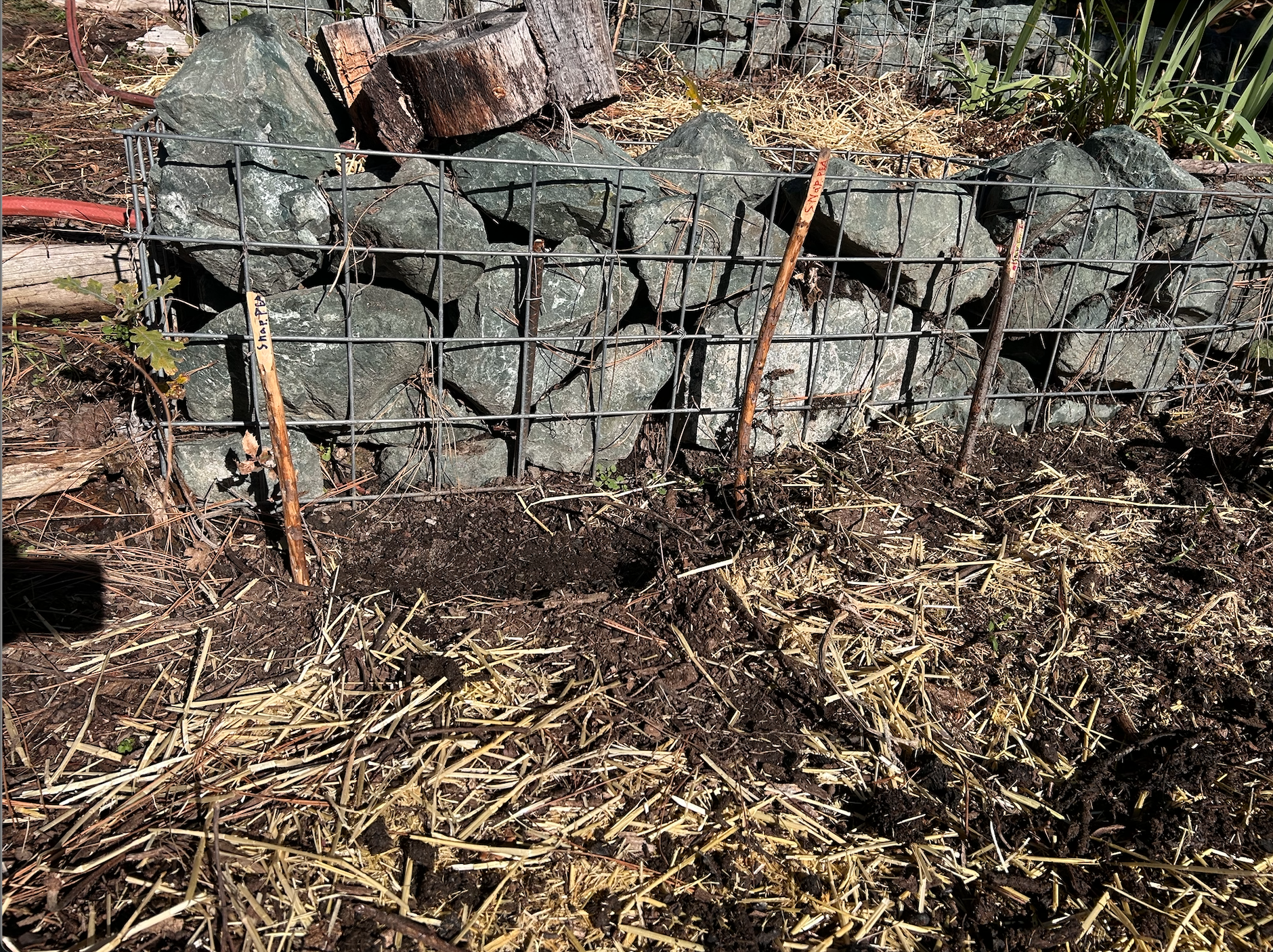
Planting on the new moon
Rudolf Steiner, whose work inspired both Waldorf education and biodynamic farming, taught that planting is best timed with the rhythms of the moon. So on the November new moon, with heavy rain in the forecast a few days later, it was time to plant.
We sowed a wide variety of plants, including plenty of peas, which help return nitrogen to the soil. Every row is marked with a plant stake the children carved and whittled themselves.
A garden without guarantees
A winter garden is never a sure thing in the foothills. Our winter weather varies a lot from year to year. We might be harvesting radishes and lettuce in December and peas in March. We might also get nothing at all.
I don’t know for sure what will happen. We can only try, do our best and leave the rest to Mother Earth. But I do know this: if we don’t plant, and we don’t try, we definitely won’t have anything to harvest during the school year. We will plant again in the spring but that won’t be ready until summer when the kids are not in school. So we do our best and leave the rest to Mother Earth.
That may be the deepest lesson of this whole block. The children did careful, thoughtful work without any promise of a reward. They learned that caring for the land is a relationship, not a transaction. The more we care for the land, the more it cares for us.
What’s next
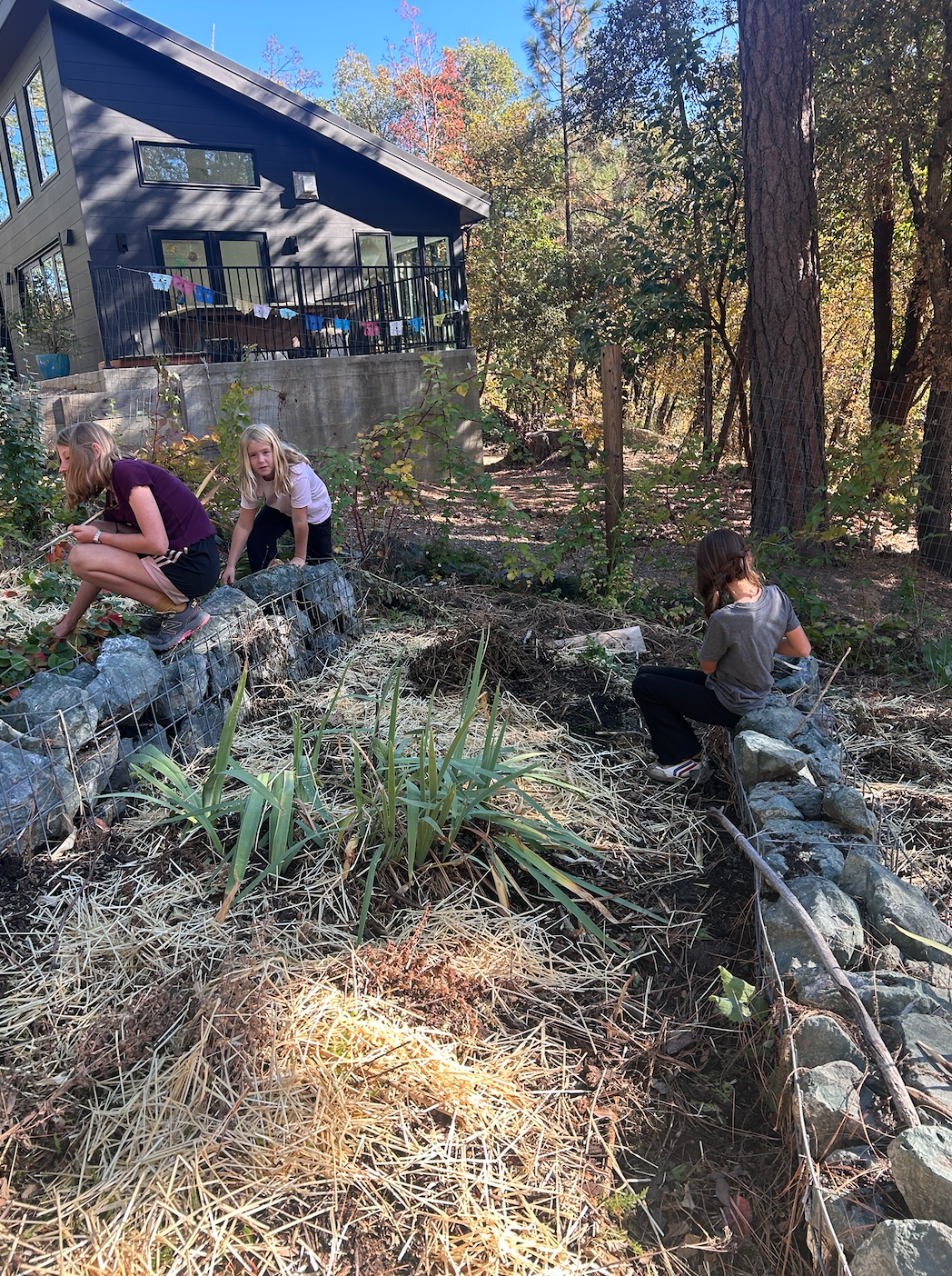
Our immediate challenge is protecting the seeds and sprouts from the adorable native deer mice who would love nothing more than a free meal. (Stay tuned on that front.)
Next week, the children will test the soil again to see whether the biochar, coop litter, mulch, straw and organic fertilizer made a difference. We can’t wait to share what they find.
Try it at home
Want to explore soil with your own children? Here are two simple places to start:
The ribbon test: Moisten a small ball of soil and squeeze it between your thumb and forefinger, pushing it upward into a ribbon. The longer the ribbon holds before breaking, the more clay your soil has. Successful ribboning takes practice. So don’t rush this one and feel free enjoy the mud play. This also would be a good time to make seed balls!
Compare two spots: Collect soil from two different places, like a garden bed and under a tree. Have your children look, touch and smell. How are they different? What might be living in each?
Soil is one of the easiest and richest subjects to explore outdoors, and you don’t need anything more than your hands and your curiosity to begin. Enjoy!